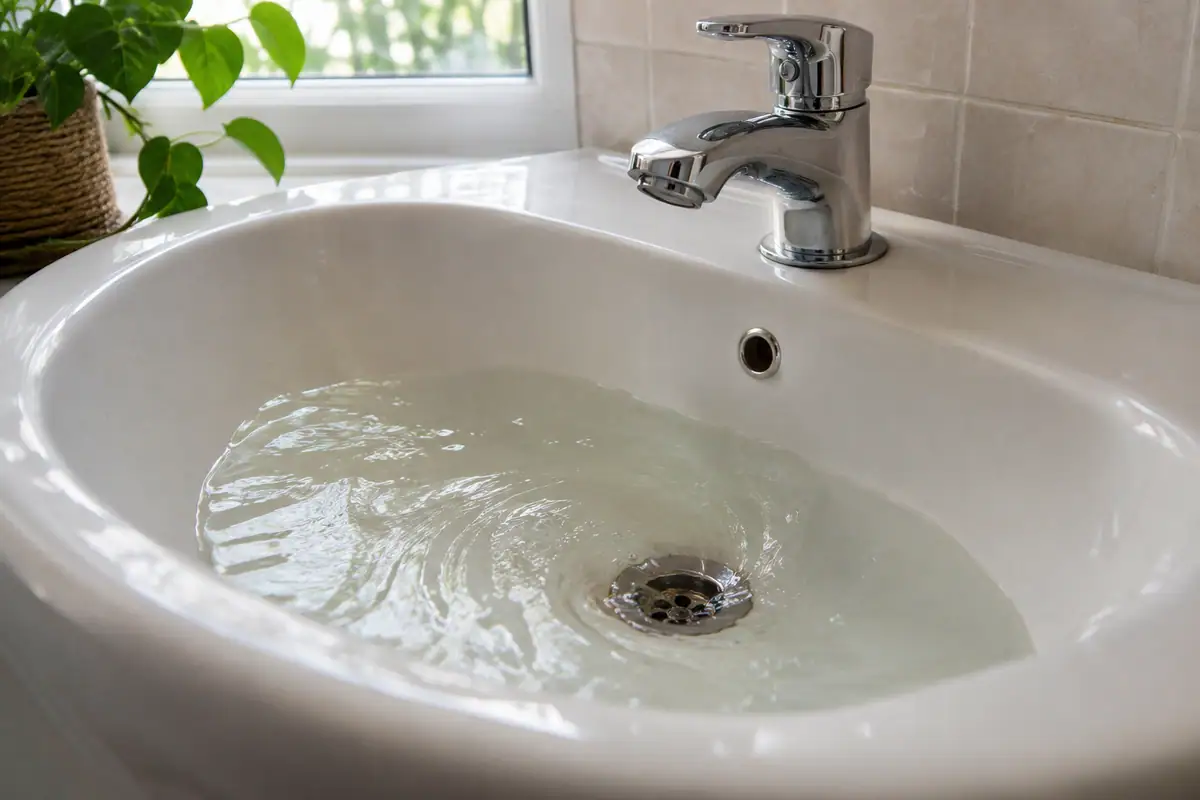
Why Is My Drain Slow?
Most slow drains come down to a handful of causes you can spot in a few minutes, and many clear without any chemicals at all.
See the common causesWhy is my drain slow? The usual reasons
When people ask why is my drain slow, the answer is usually buildup close to the fixture, not deep in the pipes. That is good news, because it is the easiest kind to clear.
- Hair and soapBathroom sinks, tubs and showers.
- Grease and foodKitchen sinks and disposals.
- A blocked ventGurgling and slow draining together.
- A sagging pipeLow spots where debris settles.
Clear it without harsh chemicals
Work through these in order and test the drain after each one.
- Clean the stopper or strainer. Most bathroom slowdowns end right here.
- Boil water for a kitchen sink. Pour it slowly to soften grease, but use hot tap water for plastic pipes.
- Use a cup plunger. Plug the overflow so the plunger can build pressure.
- Pull hair with a plastic drain tool. Push it down, twist and pull out slowly.
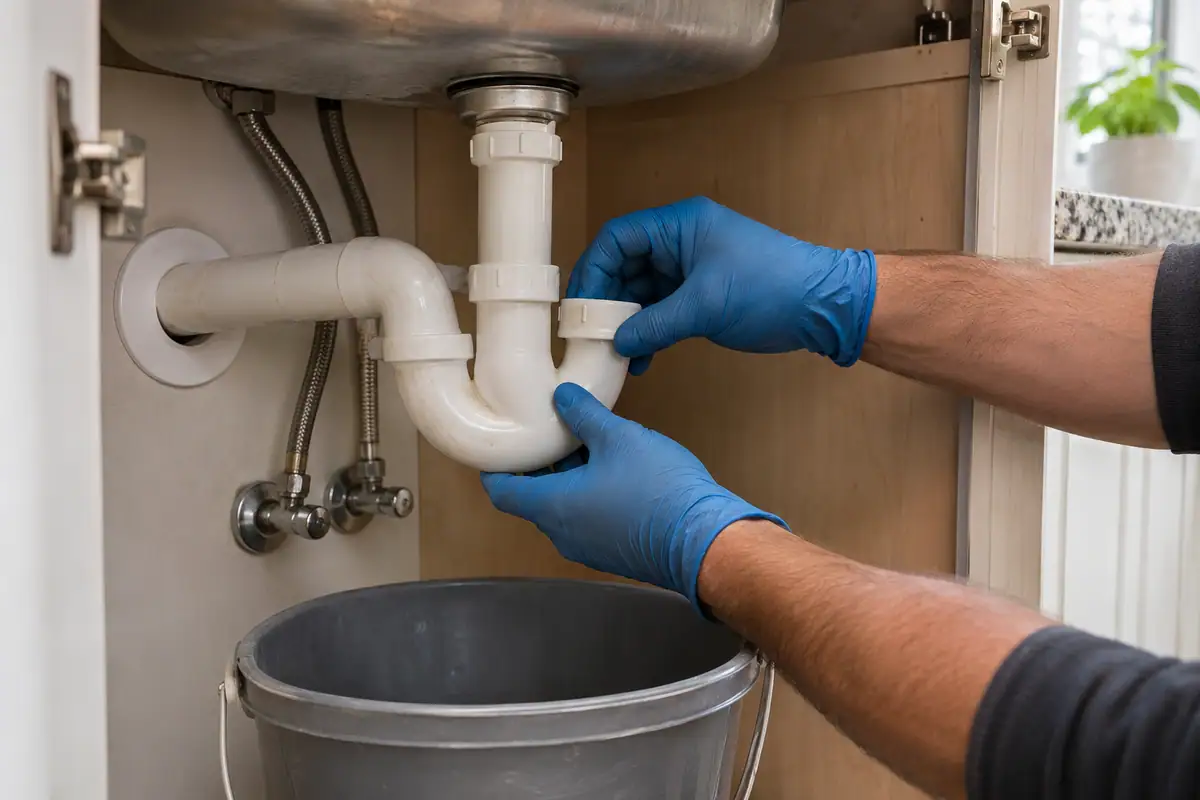
- Open the trap under the sink. Put a bucket under it and clear what you find.
If none of these work, the clog sits further along the pipe. That is where drain cleaning by a plumber with a hand snake comes in.
Each drain and its most common cause
Each fixture traps a different kind of debris, which is why one particular drain keeps slowing down.
| Drain | Most common cause |
|---|---|
| Bathroom sink | Hair and toothpaste wrapped around the pop up rod. |
| Shower or tub | Hair matted together with soap scum in the trap. |
| Kitchen sink | Grease and fine food scraps coating the pipe walls. |
| Laundry standpipe | Lint that slips past the washer filter. |
| Toilet | Too much paper at once or something dropped in the bowl. |
Water rising in another drain?
Stop running water and do not flush. That points past the fixture to the main line.
When the slow drain is not the drain
If several fixtures slow down together, or the basement floor drain fills when you run the washer, the problem is in the main line rather than one drain. That is a separate job from household drain cleaning, so stop using water and do not use a plunger on it.
A drain that slows along with a faucet that also loses pressure is two different issues. See faucet and sink repair for the pressure side.
Keep drains from slowing down again
A few habits stop most clogs from forming in the first place.
Do this
- Use a hair catcher in every shower and tub.
- Scrape plates into the trash before rinsing.
- Pour cooled grease into a can.
- Run hot water after using the sink.
Avoid this
- Pouring grease or coffee grounds down the sink.
- Flushing wipes, even ones labeled flushable.
- Using strong drain chemicals again and again.
- Forcing a snake that will not pass.
How to open a sink trap safely
Opening the trap is the step that clears most slow bathroom and kitchen sinks. Go slowly and keep a bucket ready.
Put a bucket under it
The trap holds water, so catch it before you loosen anything.
Loosen the slip nuts
Turn them by hand, or with gentle pliers if they are stiff.
Clear the trap
Pull out the hair or grease and rinse the trap in another sink.
Refit and test
Hand tighten the nuts, run water and check for drips.
Tools worth keeping for slow drains
A few simple tools handle most slow drains without chemicals.
- Two plungers, a flat cup style for basins and tubs and a flanged one for toilets.
- A plastic barbed drain tool for pulling hair from bathroom drains.
- A small hand snake for clogs just past the trap.
- A bucket and gloves for opening the trap under the sink.
- Hair catchers for every shower and tub.
Drain still slow after all of this?
Tell us which drain it is and what you tried. A licensed plumber who works in Jefferson City can come out and clear it properly.
Read about drain cleaning- Licensed plumbers
- No harsh chemicals
- Household drains cleared
Slow drain questions
Why is my drain slow right after I cleaned it?
The clog may sit past the trap, out of reach of a plunger or a drain tool, or a blocked vent may be slowing the flow. A plumber can tell which with a quick test.
Does baking soda and vinegar work?
The fizz can freshen a drain and lift a light film, yet a solid blockage seldom moves. Trying it before a plunger does no harm.
Why does my drain smell?
Rotting food or hair in the trap, or a seldom used drain whose trap water has evaporated. Clean the trap and run water through unused drains once a month.
Can a slow drain damage the pipes?
Not quickly, but standing water and the buildup behind it can wear old pipes and seals. Clearing it early is easier than waiting for a full clog.
Is a garbage disposal the reason my kitchen drain is slow?
Often. Disposals grind food finely, but starchy and fibrous scraps still clump in the pipe. Run plenty of cold water while it runs and for a few seconds after.
When should I call a plumber for a slow drain?
When the simple steps above do not work, the same drain slows again within weeks or water backs up into another fixture. See drain cleaning for what the visit involves.
Why is my drain slow only in the morning?
If several people shower one after another, a partly clogged drain cannot keep up with the volume. It may seem fine with light use. That is still a clog worth clearing before it gets worse.
Can a slow drain be caused by cold weather?
Grease in a kitchen drain hardens faster when the pipes are cold, so a kitchen sink may slow down more in winter. Pour grease into a can, scrape plates and run hot water after washing up to keep it moving.
Is it the vent if the drain gurgles?
Gurgling with slow draining can mean the vent pipe on the roof is blocked, for example by leaves or a nest, so the drain cannot pull air. A plumber can check the vent from inside and outside the house.
Why is my drain slow after a new sink was installed?
A trap set too low, a long horizontal run or a missing vent connection can all slow a new drain. Tell the plumber when the sink was installed and what changed. Reworking the trap or the pipe slope usually fixes it.
Why is my bathtub drain slow but the sink is fine?
Each fixture has its own trap, so a slow tub usually has hair and soap caught in the tub trap or the drain body under the stopper. Pull the stopper and clear what you can reach, then try a plunger with the overflow plate covered.
Is a slow drain worse in an older home?
Older drain pipes can have rough inner walls from years of buildup, which catch debris more easily. The same habits keep them flowing, but a drain in an older home may need clearing more often.
Can I pour boiling water down any drain?
Boiling water is fine for metal kitchen drains, but it can soften plastic pipes and crack a porcelain toilet bowl. Use hot tap water for plastic drains and never pour boiling water into a toilet.
Why does my drain slow down after rain?
If several drains slow after heavy rain, water may be entering the main line from outside, which is a job for a sewer specialist rather than household drain cleaning. If only one drain is slow, rain is likely a coincidence.
Will a new stopper fix a slow sink?
Sometimes. Old pop up stoppers have linkages that catch hair. Replacing them with a simpler design or a strainer makes the sink easier to keep clear.
Why is the kitchen sink slow only when the dishwasher runs?
The dishwasher drains into the kitchen sink drain or the disposal. If that drain is partly clogged with grease or food, it cannot keep up with the dishwasher. Clearing the kitchen drain usually fixes both.
Does a slow drain need a plumber or a cleaner?
Most slow drains clear with the steps in this guide. A drain that slows again within weeks, or a clog the trap cleaning does not reach, needs a plumber with a hand snake rather than another bottle of cleaner.
More help with drains and fixtures
These pages cover what comes next when a drain will not clear.