Plumbing Emergency Checklist for Jefferson City Homes
Water spreading across a floor or through a ceiling? Work through this plumbing emergency checklist from the top while you wait for help.
Start the checklistYour plumbing emergency checklist for the first ten minutes
This plumbing emergency checklist puts the steps in the order that limits damage fastest. Do as many as you safely can.
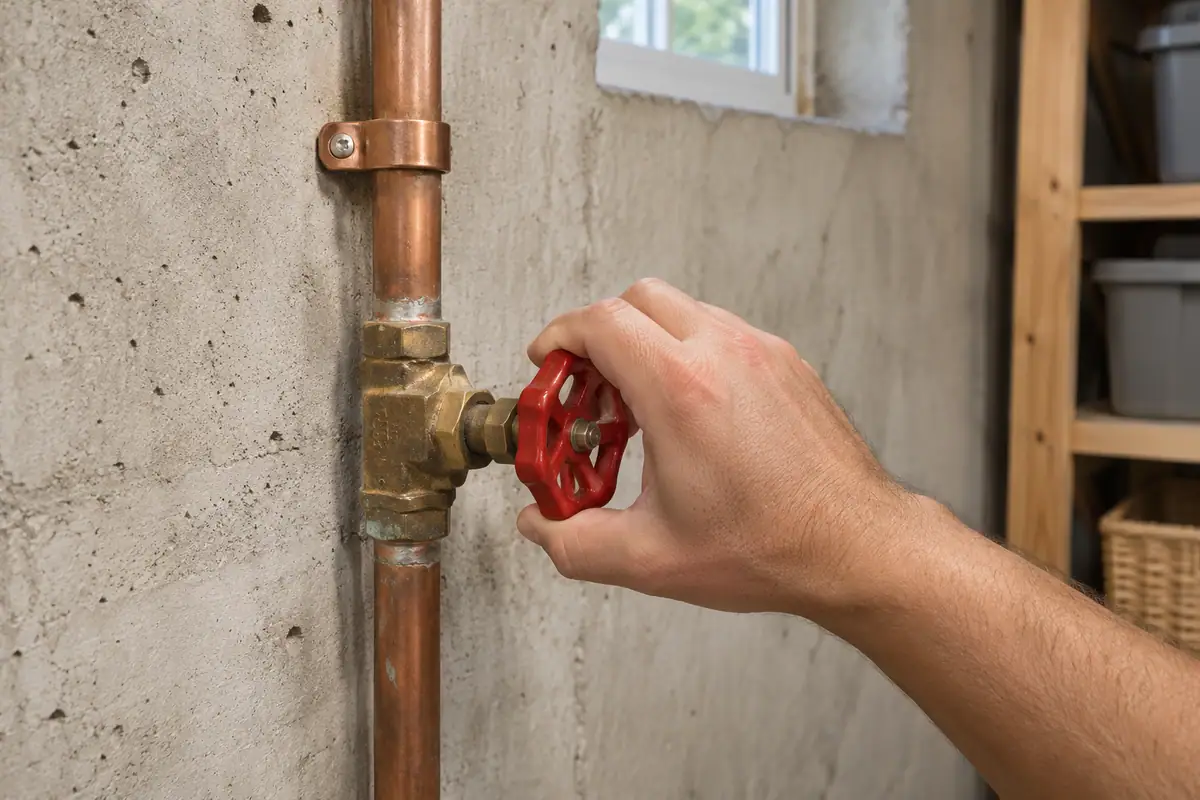
- Close the main water valve. It stops the flow to every pipe in the house. Our main shutoff guide shows where to look.
- Cut power to wet rooms. Switch off the breakers for any room where water reaches outlets, cords or light fixtures.
- Empty the pipes. Run the faucet nearest the basement floor until the water left in the lines is gone.
- Shut down the water heater. Turn off its power, or set a gas tank to pilot, so it does not run empty.
- Move people and belongings. Keep children and pets away and lift rugs, papers and electronics off the floor.
- Catch and soak up water. Use buckets, towels and a wet vacuum if you have one.
- Take photos. Record the damage before cleanup for your insurance claim.
- Phone us. Say where the water seems to start and which valves and breakers you have shut.
What to do room by room
The plumbing emergency checklist above works anywhere. These extra steps depend on the room where the trouble starts.
| Where it happens | Extra steps for that room |
|---|---|
| Kitchen | Close the two valves under the sink and unplug the dishwasher if it sits in water. |
| Bathroom | Close the valve behind the toilet and keep the bathroom door open so the floor can dry. |
| Basement | Stay out of standing water near the furnace or panel, and turn off power from a dry spot. |
| Laundry room | Close the washer valves and stop any running cycle before you mop. |
| Ceiling | Pierce the sagging spot at its low point with a screwdriver over a bucket so the water collects in one place. |
| Outside | Disconnect hoses and close the shutoff for outdoor faucets if it has one. |
Water and electricity do not mix
Never walk into standing water that might touch an outlet, an extension cord or an appliance that is still plugged in. Turn the power off at the breaker panel first, from a dry place.
A wet panel, or one you cannot get to without wading, means staying out and phoning the electric utility. Our burst pipe repair page explains the repair that follows once the area is safe.
Which leaks need a plumber tonight
Some plumbing trouble can sit until morning. Use this to decide how quickly to call.
Treat it as an emergency
- Water spraying or pouring from a pipe.
- Water coming through a ceiling or a light.
- A water heater leaking steadily.
- No water at all on a freezing morning.
Close a valve and book
- A toilet that runs or rocks.
- A faucet that drips.
- One drain that is slow but still works.
- A small leak under a sink caught by a bucket.
Main valve will not close?
Old valves can stick. Try once more with steady pressure, then call us and keep catching the water.
What to tell us when you call
These details let the plumber come prepared.
- Your street address and the best number to reach you.
- Where the water is coming from, if you can see it.
- Whether the main valve is closed and the power is off in wet rooms.
- When it started and whether it followed a freezing night.
- How old the water heater is, if it is part of the problem.
If the problem started with a frozen line, read about frozen pipe repair while you wait. If the yard is soggy, it may be the water line.
After the water stops
Keep the heat on and move air with fans so walls and floors start drying. Pull back wet carpet and lift furniture onto blocks.
Once the plumber has repaired the leak, watch for musty smells over the next week. Our guide on how to tell if you have a water leak explains what to look for.
Read about leak detection
Keep a plumbing emergency kit ready
A small kit by the main valve turns this plumbing emergency checklist from a scramble into a routine. Most of it is already somewhere in the house.
- Buckets and towelsFor catching drips and soaking up water.
- A flashlightFor basements and crawl spaces when the power is off.
- An adjustable wrenchFor stiff fixture valves.
- A written noteWhere the main valve and breaker panel are.
The emergency and the valve that stops it
Use this part of the plumbing emergency checklist to close the smallest valve that stops the water, so the rest of the house keeps working.
| Where the water comes from | Valve to close |
|---|---|
| A toilet tank or its supply line | The oval handle on the wall behind the toilet. |
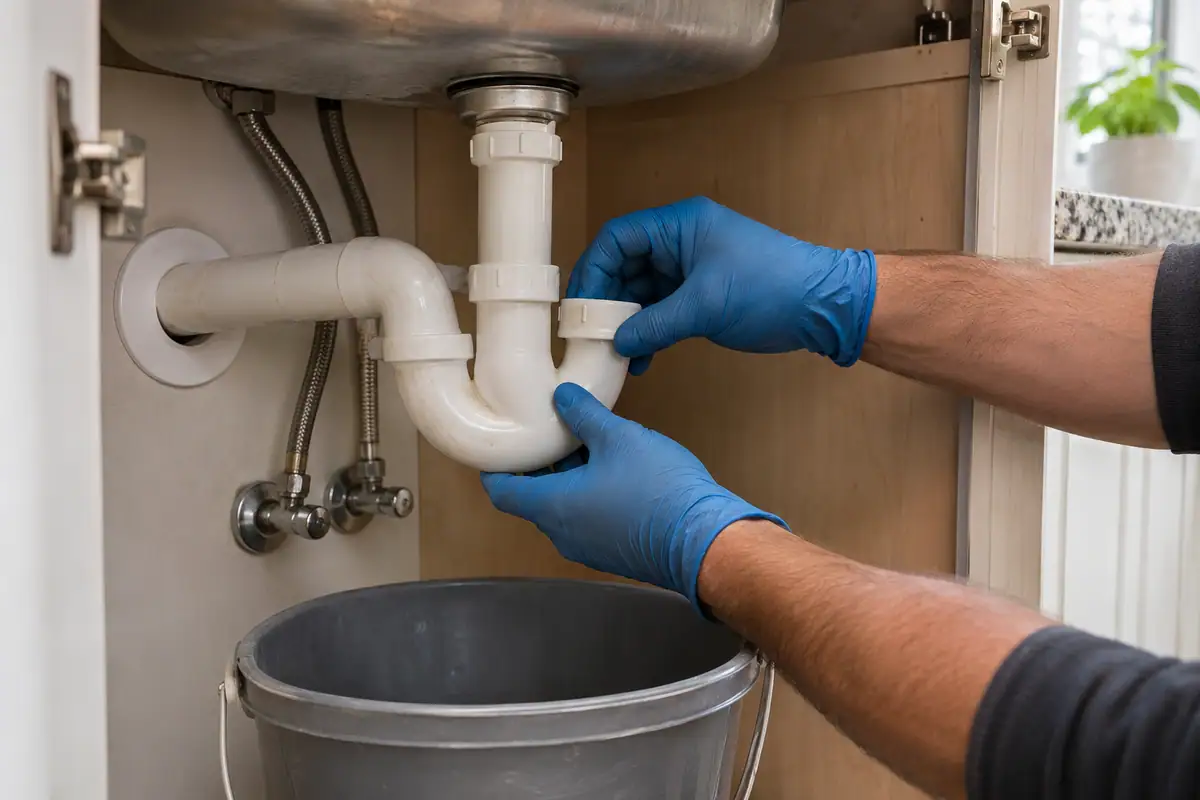
| A sink faucet or the lines under it | The two small valves inside the sink cabinet. |
| The washing machine hoses | The hot and cold valves behind the washer. |
| The water heater | The cold inlet valve on the supply pipe above the tank. |
| A pipe in a wall, ceiling or floor | The main water shutoff valve for the house. |
| The yard or the meter pit | The curb valve at the meter, with the right key. |
Water stopped? Get the cause fixed
With the water shut and the rooms safe, describe what went wrong. A licensed plumber in Jefferson City can visit and fix whatever caused it.
See every plumbing repair- Licensed plumbers
- Every Jefferson City ZIP code
- Repairs explained first
Questions about plumbing emergencies
Who should I phone first, a plumber or my insurer?
Shut off the water, then phone a plumber, because the damage grows while the leak runs. Then call your insurer with photos and the plumber's notes about what failed.
Can we stay home while there is a leak?
Generally yes, after the main valve is shut and breakers for wet rooms are off. Leave if water reaches the electrical panel, if you smell gas or if a ceiling is sagging badly.
Can I use a regular vacuum on the water?
No. Only a wet vacuum made for water is safe. A regular vacuum can be damaged and can give you a shock.
Should I turn the water back on to see where it leaks?
Only for a few seconds and only if you can watch the pipe. It is safer to leave the main off and let the plumber find the leak.
What if the leak is from the toilet?
Close the valve behind the toilet and lift the tank lid to push the flapper down. Our toilet repair page explains the usual causes.
How do I keep this from happening again?
Know where your main valve is, insulate pipes in cold spaces and replace old supply lines. Most winter emergencies start with a pipe that froze.
What if the main valve is out of reach?
Close the valves nearest the leak, such as the ones under a sink or behind the toilet, and catch the water in buckets.
If the leak is on a pipe with no valve, the curb valve at the meter can stop the water, but it usually needs a special key. Call us and tell us what you have tried.
How do I know the water is fully off?
Open a faucet on the lowest floor. A short run that tapers off shows the valve has done its job and the pipes are emptying. If water keeps flowing strongly, the valve is not closing fully or the leak is on the street side of it.
Should I unplug appliances in a flooded room?
Only if you can reach the plug from a dry spot with dry hands. Otherwise turn the power off at the breaker panel first. Never stand in water to unplug anything, and stay out of the room if the panel itself is wet.
What should I do the day after a plumbing emergency?
Keep drying the area with heat and fans, check nearby walls and ceilings for new stains and keep notes for your insurance. Watch for musty smells over the next week. Book a plumber to look at the repair if anything still seems damp.
Should I call 911 for a plumbing emergency?
Only if someone is hurt, there is a fire or a risk from electricity or gas that you cannot get away from. For water alone, close the main valve, cut power to wet rooms and call us. For a gas smell, get outdoors and phone the gas utility from there.
Can a burst pipe flood the whole basement?
Yes, if it runs for hours. A split supply pipe can release a lot of water quickly, which is why closing the main valve comes first on the plumbing emergency checklist. Every minute the water runs adds to the drying and repair afterward.
What if water is near the furnace?
Turn off the furnace at its switch or at the breaker from a dry spot, and keep away from the unit while it sits in water. Close the main water valve, then call us about the leak. The furnace may need checking by a heating technician before it runs again.
The toilet is about to overflow. What do I do?
Lift the tank cover off and hold the flapper closed with your hand, then turn the supply valve at the wall. Do not flush again. Soak up the water and keep it from reaching the floor below.
Is a sagging ceiling dangerous?
Yes. A ceiling holding water can give way suddenly. Keep everyone out from under it, switch off the breaker for that room and, when it is safe, pierce the low point over a bucket so the water comes out in one spot.
Does the furniture need to come out of a wet room?
Lift out what you safely can, starting with electronics, papers and anything that wicks water, such as upholstered furniture. Slip aluminum foil or plastic lids beneath the legs of heavy pieces that stay put so the wood does not soak up water or stain the carpet.
Can I use a fan on a wet ceiling?
Yes, after the supply is shut and the fan runs from a dry outlet in another room. Moving air helps drying, but a ceiling that is bulging or sagging should be drained and kept clear first.
Keep reading
These pages pick up where the plumbing emergency checklist ends.